Wax-Dipped vs. Flameless: What Buyers Actually Get from a Battery Powered Candles Factory
A battery powered candles factory produces fundamentally different goods than a traditional candle manufacturer — and that difference shapes everything from minimum order quantities to shelf life, safety certifications, and margin potential. If you are a retailer, hospitality buyer, or event supplier weighing traditional wax candles against battery-operated alternatives, the short answer is this: battery powered candles consistently outperform wax candles on safety compliance, reusability, and total cost of ownership, while wax candles retain an edge in perceived authenticity and fragrance delivery. The right choice depends on your channel, your customer, and how you calculate value over time.
Global demand for flameless candles has grown sharply. The battery-operated candle market was valued at approximately USD 412 million in 2023 and is projected to exceed USD 680 million by 2030, driven by fire-safety regulations in hotels, hospitals, and care facilities, as well as rising consumer preference for low-maintenance home décor. Traditional pillar and taper candle sales, meanwhile, have plateaued in many Western markets even as premium segments remain resilient.
How a Battery Powered Candles Factory Operates vs. a Wax Candle Manufacturer
The production processes are radically different, and those differences carry downstream consequences for lead times, customization, and quality control.
Battery Powered Candle Manufacturing
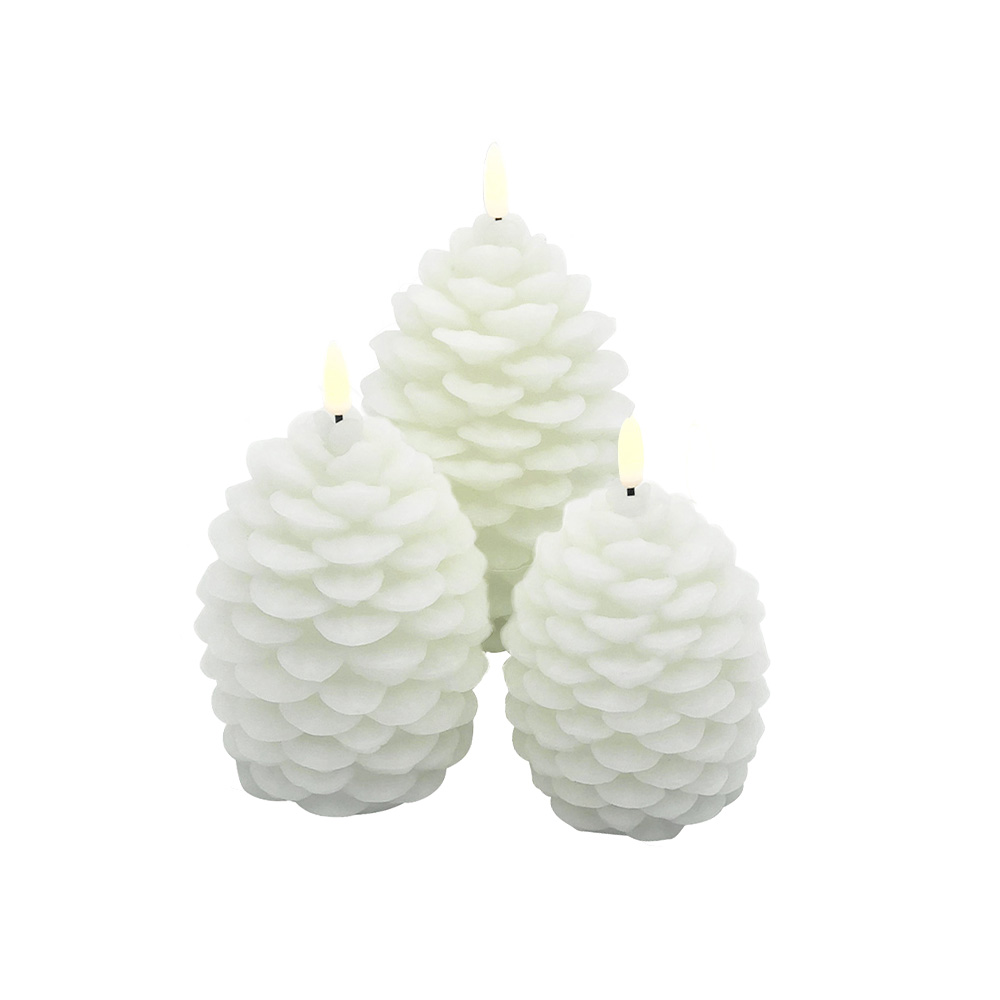
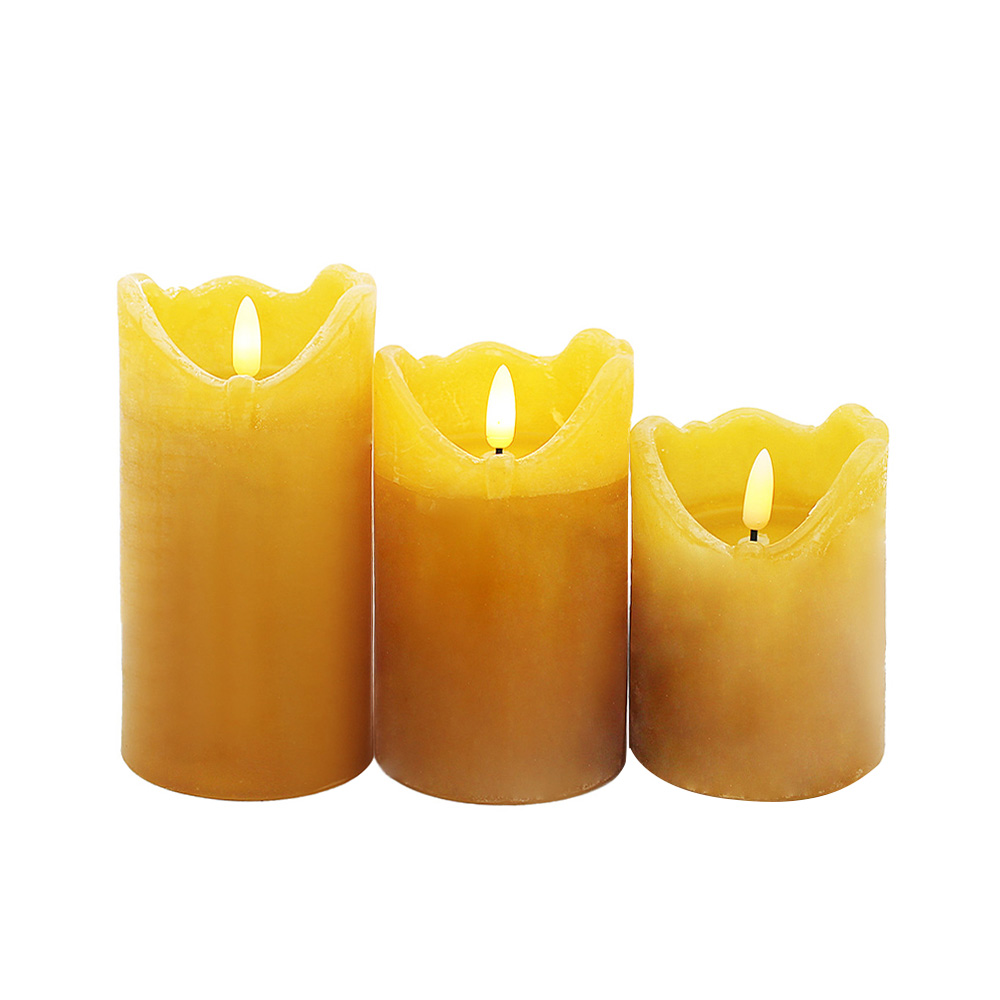
A dedicated battery powered candles factory runs an electronics-adjacent assembly line. Core components — LED flame modules, battery compartments, timer circuits, and remote-receiver chips — are sourced from electronic component suppliers, often domestically or from established supply chains in East Asia. The outer shell, which mimics wax in texture and color, is typically made from ABS plastic, paraffin-coated resin, or genuine dripped wax over a plastic core. Final assembly involves inserting the LED mechanism, fitting the battery compartment, and applying surface finishing (drip effects, ivory tints, flickering calibration). A mid-sized factory producing 500,000 units per month will typically employ around 200–400 workers across assembly, QC, and packaging lines.
Key production metrics at a competent battery powered candles factory:
- Minimum order quantity (MOQ): typically 500–2,000 units per SKU
- Lead time for standard items: 25–45 days after deposit
- Customization: flame color, flicker speed, timer settings (4-hour/8-hour cycles), remote frequency, and shell finish
- Certifications commonly held: CE, RoHS, FCC, UL, and increasingly, IEC 62368 for audio/video and IT equipment safety
- Battery type options: standard AA/AAA alkaline, CR2032 button cell, or integrated USB-rechargeable lithium
Wax Candle Manufacturing
Traditional candle factories operate more like a food-adjacent process. Raw materials — paraffin, soy wax, beeswax, coconut wax, fragrance oils, and wicks — are blended, poured into molds or containers, cooled, and finished. Scent blending is a skilled craft, and high-end manufacturers employ trained perfumers or fragrance houses. Quality control focuses on burn time, scent throw, soot levels, and wick centering.
- MOQ: often 200–1,000 units for container candles; higher for custom pillar shapes
- Lead time: 15–30 days for standard items, longer for seasonal scents
- Shelf life: 12–24 months before fragrance degrades and wax yellows
- Key compliance: ASTM F2179 (wick standards), REACH (fragrance chemicals), Prop 65 where relevant
- Burn time per unit: typically 30–200 hours depending on size — a one-time use metric
Head-to-Head Comparison: Battery Powered vs. Wax Candles Across Key Buying Criteria
The table below summarizes how products from a battery powered candles factory compare with those from a traditional wax candle manufacturer across the criteria that matter most to commercial buyers.
Comparison based on standard commercial-grade products; figures represent typical industry ranges, not individual brand specifications.
| Criteria |
Battery Powered Candles |
Wax Candles |
| Unit lifespan |
3–5 years (LED rated 50,000+ hrs) |
Single use; 30–200 burn hours |
| Fire / safety risk |
None (no open flame) |
Moderate; leading cause of home fires in multiple markets |
| Fragrance capability |
None (unless scent pad add-on) |
Strong; core product feature |
| Reusability |
Fully reusable |
Disposable after burn |
| Regulatory approval (hospitality/healthcare) |
Approved in most jurisdictions |
Banned or restricted in many venues |
| Average wholesale unit cost (mid-range) |
USD 2.50–8.00 |
USD 1.20–6.00 |
| Cost per year of use (commercial setting) |
~USD 1.00–2.00 (battery replacement) |
USD 18–72 (replacement units) |
| Smart/remote features |
Timer, remote, app control available |
None |
| Environmental profile |
Battery waste concern; low carbon per use cycle |
Paraffin is petroleum-derived; soy/beeswax options available |
| Consumer perception of authenticity |
Improving; high-end units closely mimic real flame |
High; considered the "real" product |
Where Battery Powered Candles Win — With Hard Numbers
The cost-of-ownership argument is not close when you run the math across a commercial account. Consider a hotel property with 80 guest rooms, each using two table candles at dinner service five nights per week.
- Wax candles: 80 rooms × 2 candles × 5 nights × 52 weeks = 41,600 candles per year. At a wholesale cost of USD 1.80 each, that is USD 74,880 per year, plus disposal and staff time for wax cleanup.
- Battery powered candles: 160 units purchased once at USD 5.00 each = USD 800 upfront. Annual battery replacement at roughly USD 0.50 per unit per year = USD 80. Total year-one cost: USD 880. Year two onward: USD 80.
The ROI crossover happens in the first month of operation. For hospitality groups managing dozens of properties, the savings compound dramatically. This calculation is why large hotel chains and event rental companies overwhelmingly source from battery powered candles factories rather than traditional wax suppliers.
Safety compliance adds another layer. In the United States, the National Fire Protection Association estimates that candles cause approximately 7,400 home structure fires per year, resulting in 90 deaths and USD 291 million in property damage. This data has driven fire marshals in major cities to prohibit open flames in dining establishments and event venues outright. Battery powered candles are the compliant solution — not a workaround, but the only viable option in many regulated environments.
Where Wax Candles Remain the Superior Choice
Battery powered candles do not win every category, and buyers who ignore wax candle strengths will lose customers in specific segments.
Fragrance as the Core Product
In the home fragrance and gift market, scent is not a feature — it is the entire value proposition. A luxury soy candle with a proprietary fragrance blend commands retail prices of USD 40–120 precisely because the experience is multisensory. No battery powered candle can replicate this without add-on scent pads, which remain a niche and imperfect solution. If your customer is buying a candle primarily because it smells like cedarwood and vanilla, a flameless alternative is a category miss, not a category substitute.
Ritual, Mindfulness, and Gifting Occasions
Candle purchases spike around holidays, anniversaries, and self-care rituals. In these contexts, the act of lighting a candle carries symbolic weight. Consumer research consistently shows that gift recipients perceive wax candles as more premium and intentional than flameless alternatives. For specialty gift retailers, artisan marketplaces, and spa brands, wax candles remain the default choice and likely will for the foreseeable future.
Lower Entry Cost for Small-Batch Retail
For a boutique retailer or pop-up shop testing a new product line, a wax candle manufacturer's lower MOQ and shorter lead time can be decisive. Some artisan wax suppliers will fulfill orders of just 50–100 units, while most battery powered candles factories set floors of 500 units or higher to cover the tooling and electronics sourcing costs.
What to Evaluate When Sourcing from a Battery Powered Candles Factory
Not all factories producing flameless candles operate to the same standard. When vetting suppliers, commercial buyers should assess the following:
- Certification documentation: Require CE, RoHS, and FCC certificates as a baseline. For the US market, confirm compliance with CPSC regulations. For healthcare and senior living settings, ask specifically about IEC 60598 (luminaires) or equivalent lighting safety standards.
- Flame realism technology: Low-end units use a simple blinking LED. Mid-tier factories use dual-LED or multi-LED modules with randomized flicker algorithms. Premium factories use multiple independently moving LED elements with irregular timing — the difference is immediately visible side by side. Request physical samples before committing to a large order.
- Battery compartment access: Consumer complaints about battery-powered candles cluster around difficult battery replacement. Evaluate ease of access, quality of the battery contacts, and whether the design discourages battery leakage from damaging internal components.
- Timer and remote reliability: Test the 4-hour and 8-hour timer functions across 30+ days. Remote-controlled units should respond consistently within the advertised range (typically 5–10 meters). Ask the factory about the remote chip supplier and whether replacement remotes are available as spare parts.
- Wax shell quality: For units using real wax coatings over plastic cores, check for cracking in cold temperatures (important for European winter markets), color stability under UV exposure (relevant for retail display), and the quality of the drip effect if it is a design feature.
Emerging Trends Reshaping Both Factory Types
USB Rechargeable Cells Are Replacing Disposable Batteries
One of the most significant shifts at battery powered candles factories in the last three years is the move toward integrated lithium-ion cells charged via USB-C. This eliminates battery disposal concerns, reduces ongoing operating costs, and addresses a growing pain point for environmentally conscious buyers. Units with built-in 400–600mAh batteries now offer 8–12 hours of runtime per charge, sufficient for most commercial use cases. Expect this to become the dominant configuration within five years.
Smart Home Integration Is Arriving
A small but growing number of factories are producing flameless candles with Bluetooth or Wi-Fi modules compatible with smart home ecosystems. This allows scheduling, color temperature adjustment (warm white to amber), and group control across multiple units from a single app. The wholesale cost premium for smart-enabled units is currently around USD 3–6 per unit — significant at lower price points, negligible for commercial buyers purchasing in volume.
Wax Candle Manufacturers Are Investing in Cleaner Formulations
On the wax side, regulatory pressure around VOC emissions and phthalate-containing fragrance compounds is pushing manufacturers toward cleaner inputs. The EU's Cosmetics Regulation and IFRA fragrance standards are becoming de facto global benchmarks, and factories serving export markets are reformulating to comply. Soy, coconut, and rapeseed wax blends are gaining share over pure paraffin as input costs for plant-based waxes have declined roughly 15–20% since 2021 due to expanded agricultural supply chains.
Making the Sourcing Decision: A Framework for Buyers
Rather than treating this as a binary choice, many experienced buyers source from both factory types and segment by channel. The following framework helps clarify which product fits which context:
- Hospitality, healthcare, senior care, event rental: Battery powered candles factories are the clear choice. Safety compliance, reusability, and total cost of ownership all favor flameless products decisively.
- Specialty retail, gifting, home fragrance brands: Wax candle manufacturers remain the core supplier. Scent and perceived authenticity cannot be replicated by flameless alternatives at any price point.
- Mass market retail (seasonal, holiday décor): Battery powered candles from volume-focused factories, where low per-unit cost and visual appeal matter more than fragrance.
- Outdoor events, weddings, and pop-up dining: Battery powered candles handle wind and weather; wax candles are impractical and increasingly non-compliant for gatherings above a certain size.
- Luxury interior design and high-end restaurant groups: Premium flameless units with high flame realism and rechargeable batteries are increasingly winning this segment on the strength of operational simplicity alone.
The question is not which type of factory is better in the abstract. It is which factory type — and which specific supplier within that category — is optimized for the exact use case you are trying to serve. Battery powered candles factories have built a compelling operational and economic case across most commercial applications. Wax candle manufacturers hold irreplaceable ground wherever sensory experience and cultural ritual define the product's value.



 English
 Deutsch


 +86-18067520996
 +86-574-86561907
 +86-574-86561907
 [email protected]

 Wholesale Outdoor Flameless LED Candles Manufacturers
