


 English
 Deutsch
Outdoor LED Candles: Specs, Materials, and Sourcing Guide for Global Buyers
A Dutch importer placed an order for 2,000 outdoor LED candles for a Christmas market. The samples had been flawless. After two weeks of rain and near-freezing nights, roughly 6 percent came back with corroded battery contacts. The flickering flame effect, which had taken three rounds of sampling to approve, was never the problem.
That story captures the difference between a candle that looks convincing and a candle that survives a season outdoors. For buyers, the decision comes down to four engineering details: ingress protection, battery compartment sealing, housing material, and low-temperature behaviour. Decorative realism sits below all of them.
What follows is a practical breakdown of those details, the formats that hold up outside, and the checks worth running before a container leaves the factory.
What Actually Makes an LED Candle "Outdoor"
The word "waterproof" on a product page is marketing. In practice, an outdoor LED candle is defined by a small set of measurable properties, and each one maps to a specific way the product fails.
- Ingress protection. Indoor decorative candles are effectively IP20, with no sealing at all. IP44 resists splashes from any direction, which is enough for a covered porch. Any unit left out in open weather should be rated IP65 or better.
- Battery compartment sealing. This is where water usually gets in. A snap-on plastic cap loosens in transit and holds standing water. A gasket combined with a screw or twist cap is the dependable arrangement.
- Condensation control. A sealed housing is not a dry housing. Temperature swings pull moisture out of the air and deposit it on the terminals, which is why a dry-looking candle can rust from the inside. Desiccant packs or a breathable membrane help.
- Low-temperature behaviour. Alkaline cells lose capacity quickly near freezing and badly below -10°C. Lithium cells hold up far better in winter installations, and batteries should be stored separately during the off season.
- Wind stability. A light plastic cylinder falls over in a modest breeze. A weighted base, a ground stake, or a cement housing solves it.
- Visibility at distance. Outdoor candles are viewed from several metres away. Light output needs to match the viewing distance, not just the colour temperature.
Skip any of these and the lesson arrives during the first return season, when the product is already sitting in a retail aisle.
The Spec Sheet That Matters Before Ordering
Most sourcing disagreements trace back to a quotation that never stated these values. The table below lists the indoor defaults, the outdoor requirement, and the consequence of ignoring it.
| Specification | Indoor default | Outdoor requirement | Failure when ignored |
|---|---|---|---|
| Ingress protection | IP20, unsealed | IP44 for sheltered use, IP65 for exposed use | Water reaches the electronics on the first wet night |
| Battery compartment | Snap-on plastic cap | Gasket with screw or twist cap | Contacts corrode, units die within weeks |
| Battery chemistry | Standard alkaline | Lithium for cold climates | Capacity collapses below 0°C |
| Housing material | Wax or thin plastic | Cement, thick glass, UV-stabilised plastic | Warping, cracking or fading within one season |
| Base design | Flat, unweighted | Weighted base or ground stake | Candles tip over in wind |
| Controls | Manual switch | Remote with timer | Staff must walk the site twice a day |
| Packaging | Standard retail carton | Moisture barrier with corner protection | Breakage and condensation during shipping |
Which Outdoor LED Candle Formats Hold Up Outside
Format matters as much as specification, because each design carries a different number of moving parts, openings and weak points.
3D flickering pillar candles
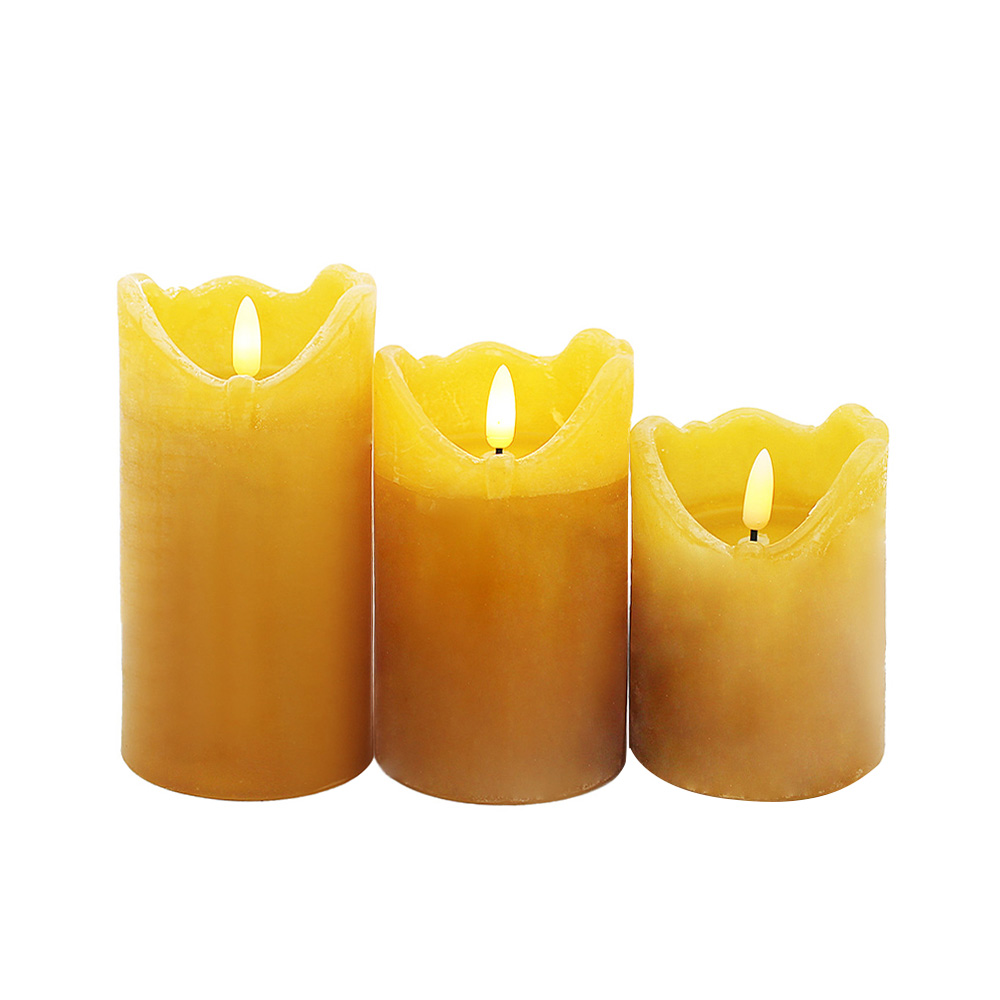
The most common format, and the easiest to manufacture at scale. A three-dimensional wick with a small LED beneath it produces a convincing flame, and the sealed body can reach IP65 without much difficulty. The limitation is the shell: wax-finished pillars soften in direct summer sun, so a UV-stabilised plastic or cement body is the safer choice for permanent outdoor use.
Cement 3D candles
Concrete housings carry their own weight, sit low on the surface and shrug off UV and freeze-thaw cycles. Hand-carved and stone-pattern surfaces age instead of fading, which suits garden and patio retail. The trade-off is freight: a cement pillar can weigh three to five times as much as a plastic equivalent, so shipping cost per unit rises. For exposed locations, that weight is exactly the point.
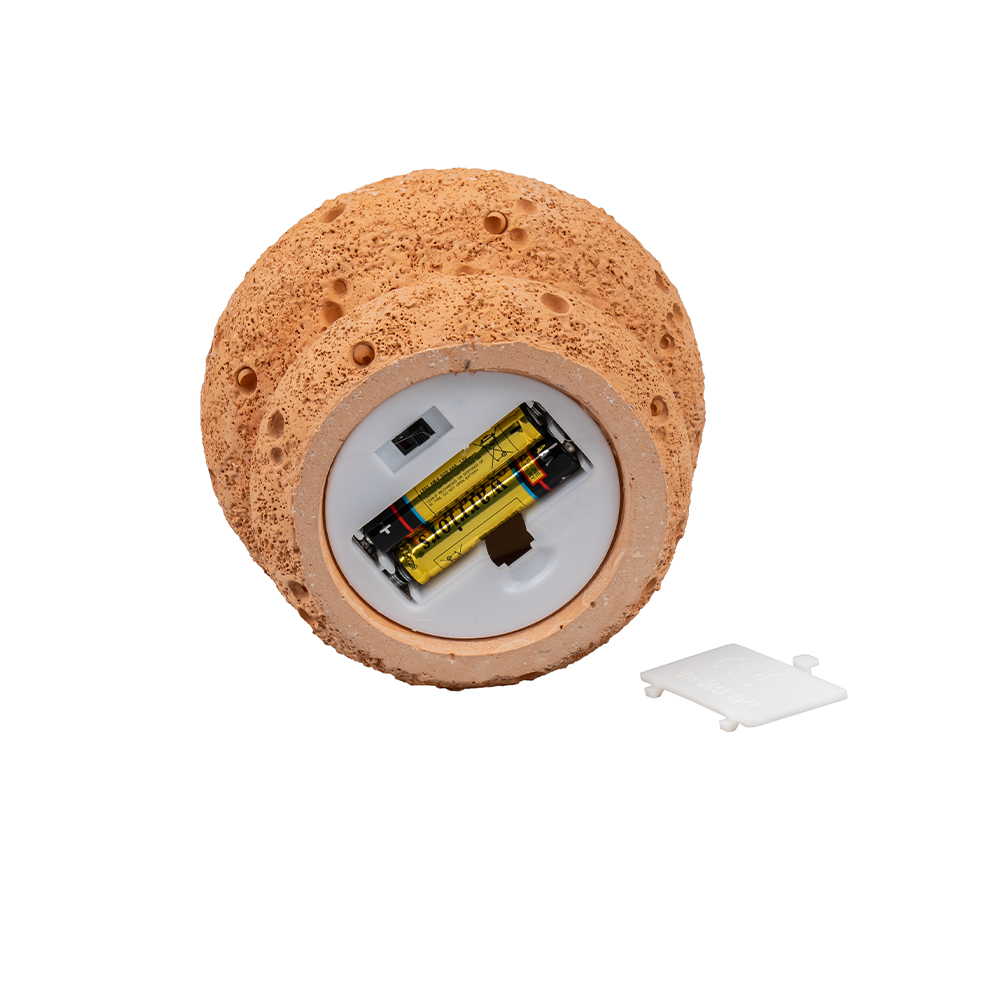 Waterproof Cement LED Flameless Candle with TimerA cement-and-wax flameless LED candle with 3D warm-white flicker, timer, and waterproof construction for gardens, patios, and indoor tables.View Product →
Dancing and swinging candles
These rely on an internal motor to tilt the flame piece, and the motion is genuinely convincing. They are also the least forgiving format outdoors. Lubricant thickens in cold weather, moisture reaches the motor cavity, and the swing either stalls or becomes audible. Unless the waterproof rating is explicit and tested, treat them as porch and indoor products.
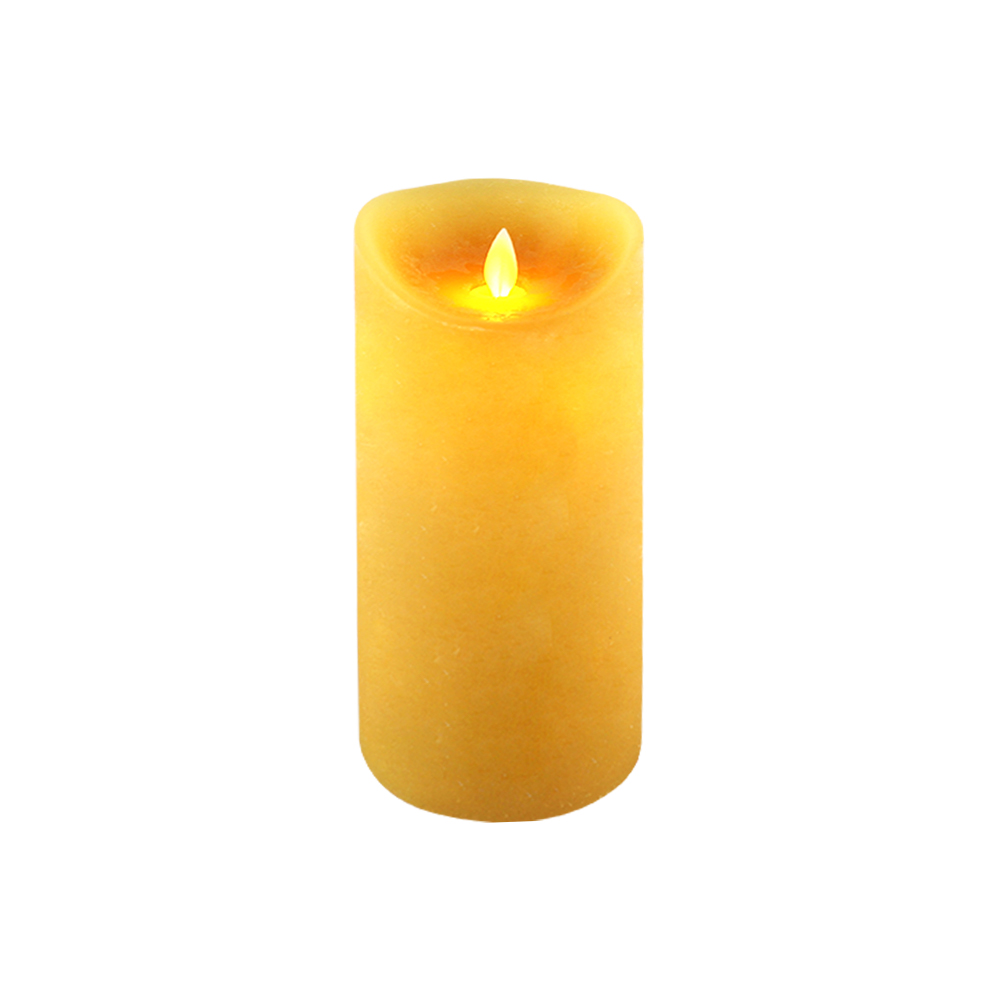 Outdoor Waterproof Electronic LED Candle with RemoteSealed plastic-and-rubber LED candle with remote, timer, and ambient light sensor, suited to wet outdoor settings and events.View Product →
Taper candles and lanterns
Slim candles need help outdoors, and lanterns provide it. A taper candle inside a glass or metal hurricane lantern is far more weather-resistant than the candle alone, because the lantern takes the wind and rain while the candle supplies the glow. This combination performs well in coastal gardens and open-air restaurants, where a free-standing candle would not last a week.
Power, Timers, and Remotes: Where Outdoor Failures Hide
The electronics inside an outdoor candle are simple, but the interfaces around them are not. Most field complaints originate at three points.
- Terminals. Even in a dry housing, damp air and handling leave enough residue to start corrosion on cheap contacts. Nickel plating helps considerably, and removing batteries during storage eliminates the leak risk entirely.
- Remote type. Infrared remotes need a clear line of sight and typically work within five to eight metres, which is awkward on a patio. Radio-frequency remotes tolerate shrubs, walls and distance, and are the better match for outdoor installations.
- Timer behaviour. A six-hours-on, eighteen-hours-off cycle is standard. Confirm whether the timer resets after a power interruption, because a candle that silently drops its schedule will generate complaints even though nothing has failed electrically.
Switch design deserves a mention too. A rubber-sealed toggle or a touch sensor under a sealed shell holds up; an exposed sliding switch is a common leak path, and it is usually the first component a factory trims when a target price gets aggressive.
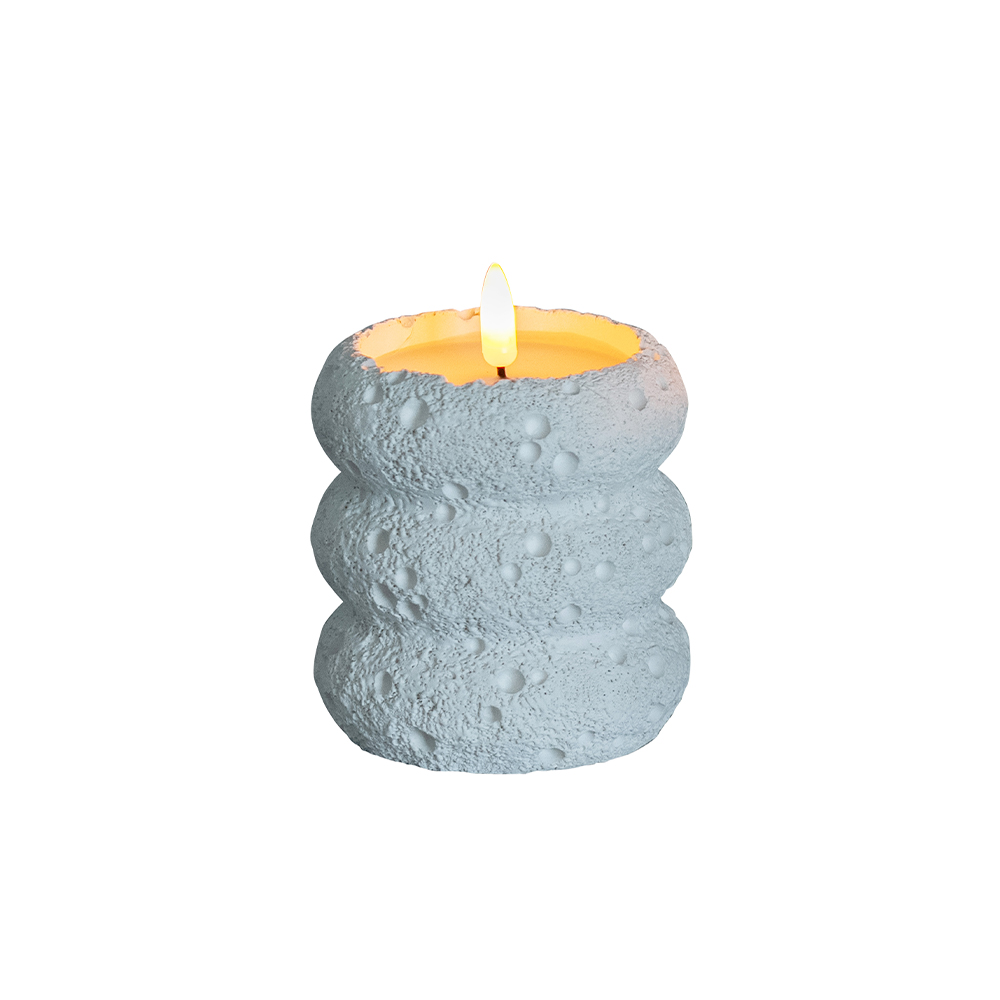 LED 3D Cement Flickering Flameless Candle with RemoteCement-and-wax 3D flickering candle with remote and timer; consider it when comparing outdoor housing materials and switch options.View Product →
Housing Material Trade-Offs
Once the electronics are sealed, the housing becomes the limiting factor. The comparison below is a relative view of how each material behaves through a full outdoor season.
Relative outdoor durability by housing material
Cement leads because it resists UV, holds temperature slowly and does not move in wind. It does need proper curing; trapped mixing water expands when it freezes and cracks the body from within. Thick glass is stable against UV and heat but breaks, so packaging cost rises. UV-stabilised plastic is the lightest and cheapest option, yet low-grade compounds yellow and embrittle within a season or two. Wax finishes look best indoors and should be treated as a decorative outer layer rather than a structural one.
A Sourcing Checklist Before You Commit
These are the checks that separate a successful outdoor order from an expensive lesson, and they take less than a day per supplier.
- Request an IP test report instead of accepting a "waterproof" claim on a quotation.
- Inspect the battery compartment yourself, looking for gaskets, threaded closures and plated terminals.
- Test the remote and timer at -15°C and at 40°C, and measure the actual working distance rather than the stated one.
- Confirm light output and beam pattern against the intended viewing distance, not just the colour temperature.
- Weigh the base and run a simple fan test to screen out the candles that will not stay upright.
- Place samples outdoors for two weeks; condensation damage needs time to appear and will not show up on a desk.
- Review packaging against sea freight humidity, especially for glass and cement bodies.
Buyers who want a longer version of this reasoning can follow our buyer's guide to sourcing LED flameless candles, which covers sample rounds and specification negotiation in more detail.
Documentation Buyers Usually Ask For
Compliance paperwork is part of the product, not an afterthought. CE and RoHS documentation covers the standard European requirement for decorative lighting, FCC documentation is normally expected for shipments into the United States, and any product containing a lithium cell needs a UN38.3 test summary accompanying the transport documents.
These files should be available at the quotation stage, before a container is loaded. Our own certification page lists the standards the products are tested against, and requesting the matching reports early avoids a delay at the port.
Outdoor LED candles are small weatherproofing projects, not just decorative objects. The flame effect sells the first order; the sealing, the housing and the battery chemistry decide whether a second order follows.
Work through the four fundamentals in order, prove them with samples that have actually spent time outside, and the returns conversation never happens.



Ningbo Weizhi Electronics Co., Ltd.
- We will be pleased to provide products with high quality, reasonable price, punctual delivery and best service for you!
GET A QUOTE
Building 2, No. 2477, Cihai North Road, Xipu Town, Zhenhai District, Ningbo City, China
-
 +86-18067520996
-
 +86-574-86561907
-
 +86-574-86561907
-
 [email protected]
- +8618067520996
- +86 18074202116
- WhatsApp: +86 18067161072

Copyright 2024 Ningbo Weizhi Electronics Co., Ltd. All Rights Reserved.
 Wholesale Outdoor Flameless LED Candles Manufacturers
