


 English
 Deutsch
Battery Powered LED Candle Buying Guide: Battery Platform, Wick Design and Housing Choice
Two samples of the same 3 × 4 inch ivory pillar land on a buyer's desk in July. Both are quoted as a battery powered LED candle with flicker, timer and remote. One runs eleven weeks on a set of alkaline cells. The other dims in nine days and starts to buzz. The LED inside is identical. What separates them is the power budget, the wick mechanism, and how much heat the housing traps around the driver.
So the conclusion first: settle the battery platform and the run-time test method before anyone argues about flame realism. Cost, freight weight, return rate and the seasonal calendar all follow from those two decisions, and none of them can be fixed later by a nicer colour box.
Battery Platform Drives Run Time, Cost and Freight
A battery powered candle is a small energy-budget problem. The LED itself is cheap to run; the timer circuit and the infrared receiver are the quiet drain. A receiver that pulls 0.3 mA around the clock burns roughly 7 mAh per day, which is over 500 mAh across ten weeks, before the flame has produced a single lumen. Ask for the quiescent current figure in writing, in milliamps, and ask how it was measured.
Capacity then decides everything else. Three AA cells give you roughly 2,500 to 2,800 mAh at 4.5 V, three AAA cells give 1,000 to 1,200 mAh, and a CR2032 gives about 220 mAh at 3 V. Multiply by the driver efficiency and divide by the LED plus standby draw, and you have a run-time estimate you can defend to a retail buyer. Most disputes come from a claim measured with premium cells at 20 °C and then repeated by a customer using budget cells in a cold room.
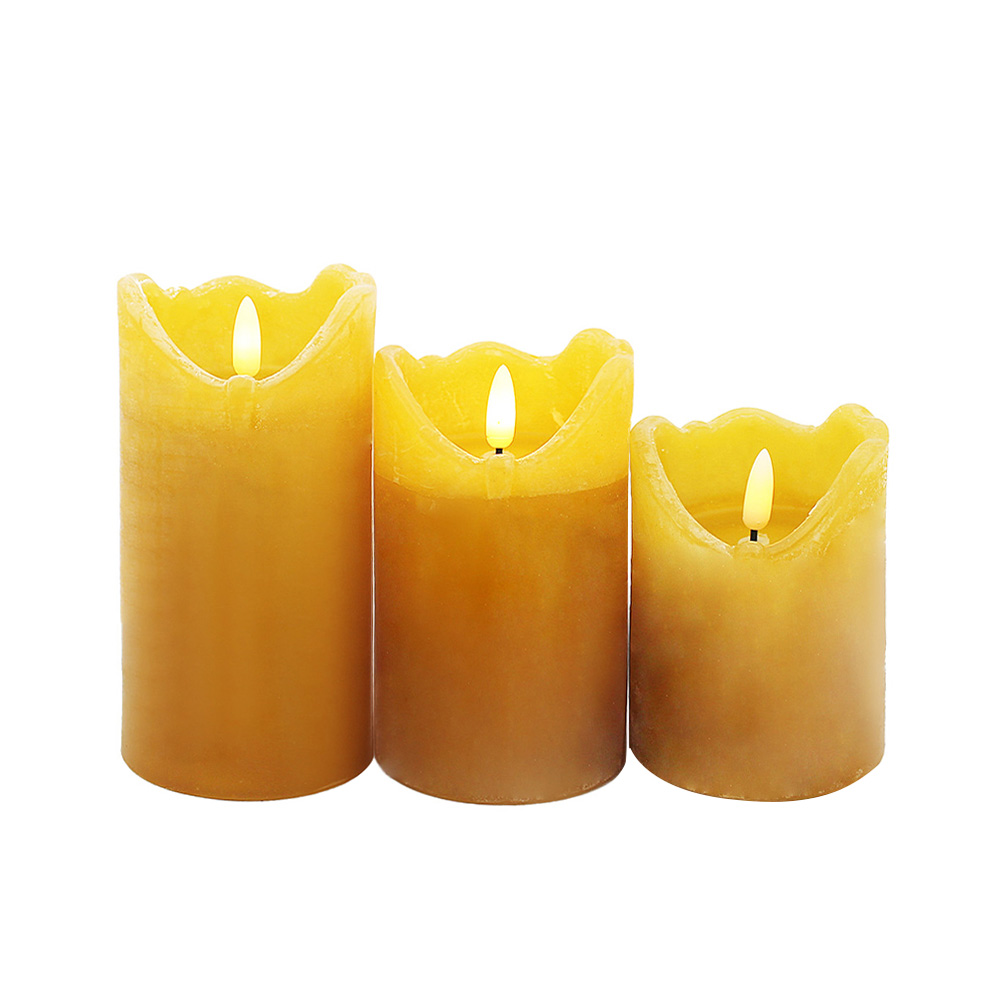
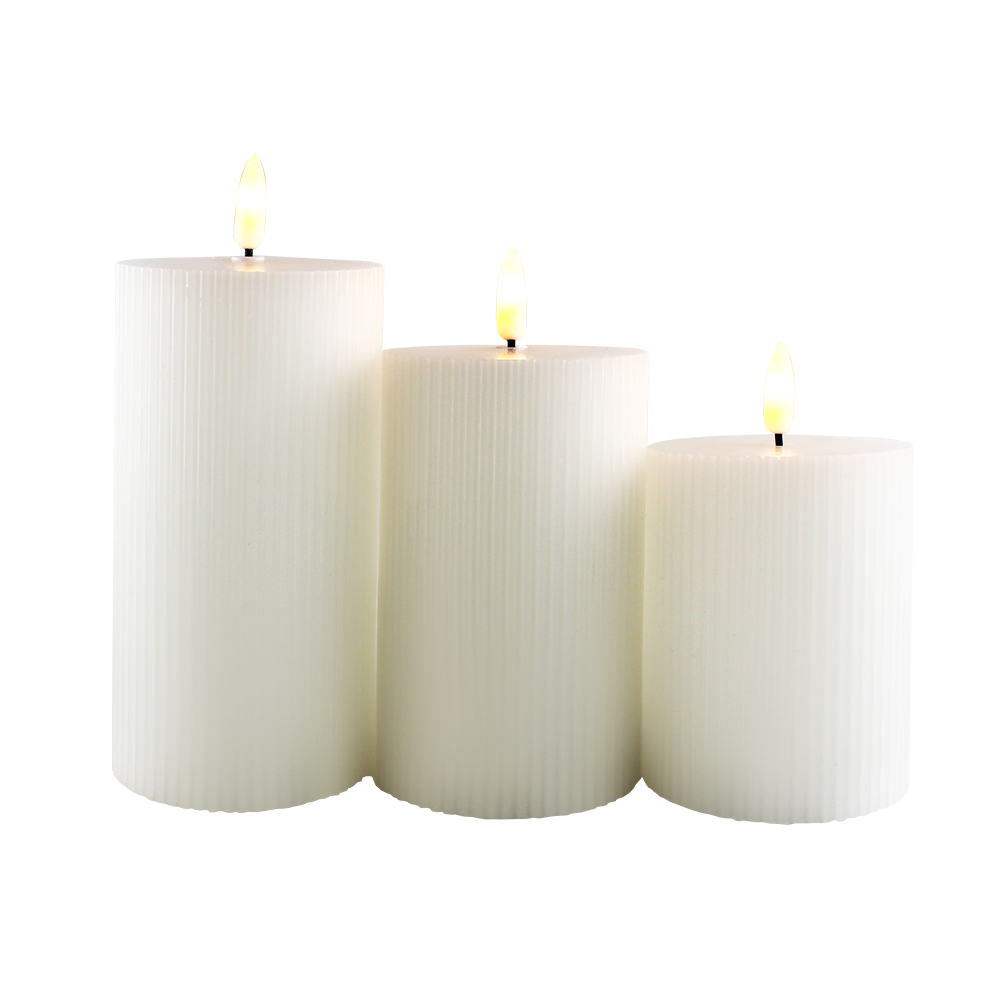 Wholesale Battery-Powered Flameless LED Candles with TimerWholesale flameless LED candles with 2 or 3 AAA power, timer/remote options, warm 1800K–3000K light, and listed 100–500-hour battery life for checking runtime claims.View Product →
| Power source | Typical capacity | Indicative run time | Best fit | Main risk |
|---|---|---|---|---|
| 3 × AA alkaline | 2,500–2,800 mAh | 90–130 hours | Core seasonal SKUs with remote and timer | Unit weight; cell leakage during long storage |
| 3 × AAA alkaline | 1,000–1,200 mAh | 45–70 hours | Slim pillars, votives and gift sets | Claims that assume fresh premium cells only |
| 2 × CR2032 | 220 mAh at 3 V | 25–40 hours | Tea lights and small decorative pieces | Little current headroom; visible dimming as voltage sags |
| 3.7 V rechargeable, 1,200 mAh | 1,200 mAh | 60–90 hours per charge | Premium and repeat-use programs | UN38.3 paperwork; charging port wear |
Cold is the other variable. Alkaline cells lose a large share of their usable capacity near freezing, which matters for porch lanterns and outdoor pillars sold into northern European and North American markets. If the product is going outside in November, specify the low-temperature run time separately rather than quoting the 20 °C figure.
The Wick Mechanism Is What the Customer Actually Judges
Shoppers do not evaluate milliamps. They judge the flame for two seconds in a shop aisle, and the judgement is almost entirely about movement. A static LED behind a frosted diffuser reads as a night light. A 3D wick, where a thin plastic flame is lit from below and balanced on a pivot so it sways, reads as a candle.
The added cost at factory level is usually small, in the range of a few cents to a few tens of cents per unit depending on the mould and the magnet assembly. The added perceived value is much larger, which is why the mechanism deserves its own line on the specification sheet rather than being buried inside the phrase "realistic flicker".
Three Mechanisms, Three Failure Modes
- Static LED with diffuser: no moving parts, longest life, lowest cost, weakest realism.
- 3D pivoting wick: strong realism, sensitive to dust on the pivot and to low supply voltage, which can make the flame stall at the end of battery life.
- Dancing or swinging body: the whole candle sways, which looks dramatic but needs a weighted base or the unit will walk across a polished table.
Test all three the same way: listen at 40 cm in a quiet room, because a buzzing electromagnet is the most common return reason after dead batteries. Then run the unit at fresh voltage, at 1.2 V per cell and at 1.0 V per cell, and confirm the wick keeps moving at the low end. Finally drop the retail carton from 30 cm on each face and check that the wick has not jumped its pivot.
Housing Material Sets Freight, Breakage and Outdoor Claims
Housing choice is a logistics decision disguised as a design decision. A heavy pillar multiplies across a container, and the freight cost per unit can exceed the difference in ex-works price between two suppliers.
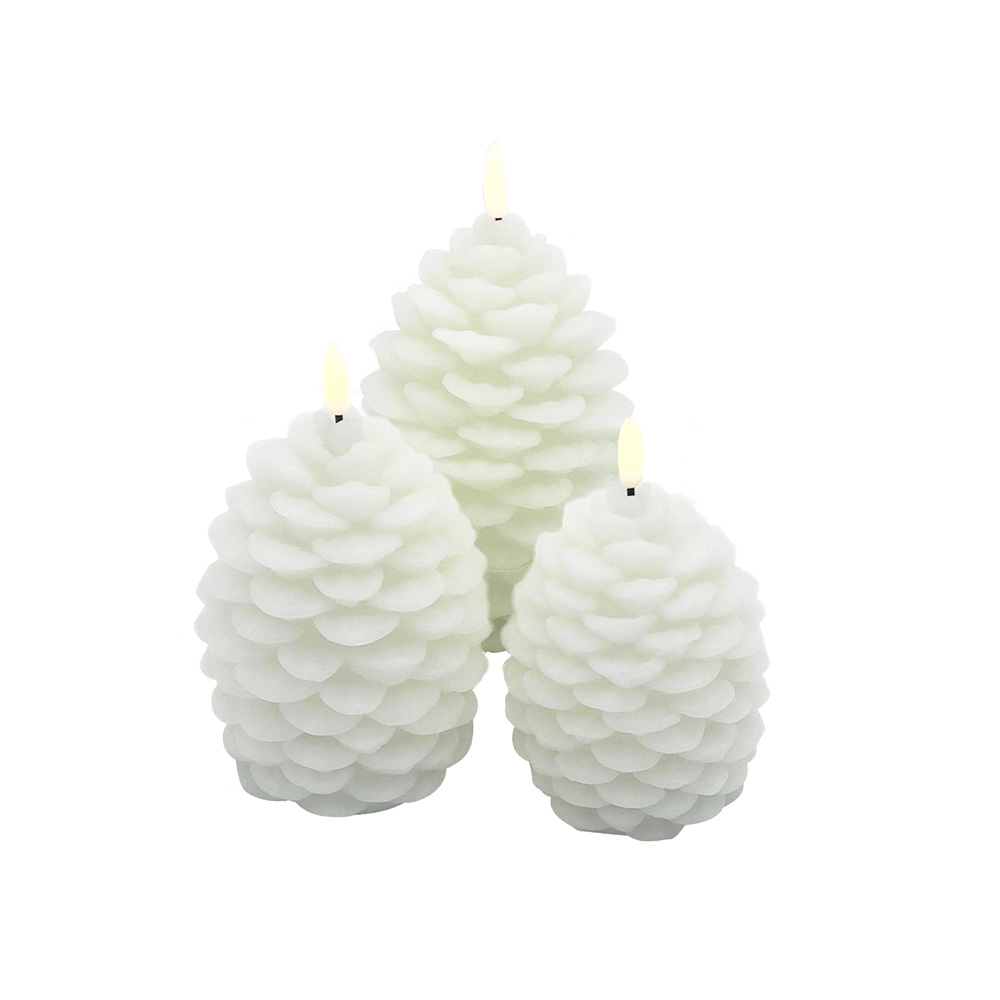
Wax gives the best hand-feel and the worst summer behaviour. A container interior can pass 60 °C in July, and paraffin softens well before that, so a wax pillar shipped in peak season may arrive leaning. Either specify a higher melting-point blend or move the shipment window.
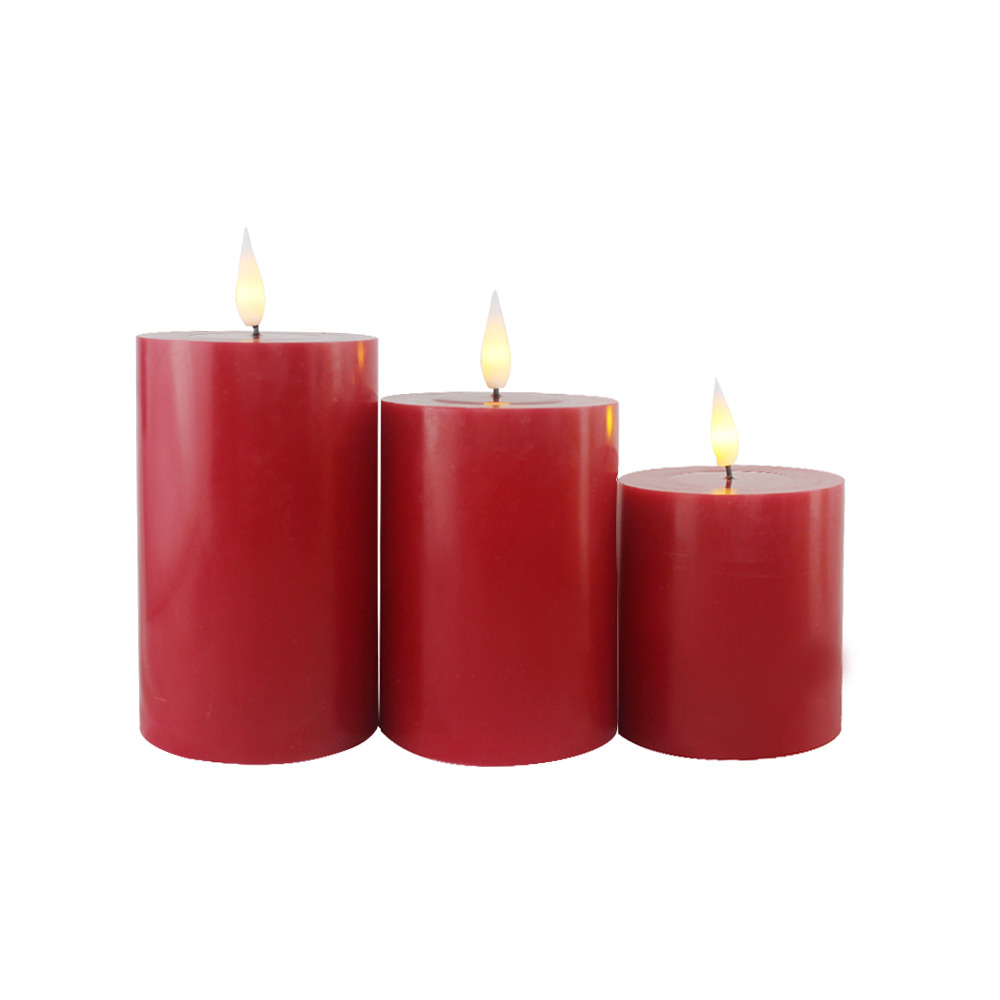
Plastic is the workhorse for volume programs. A matte finish and a light surface texture remove most of the toy-like sheen, and the material tolerates the drop and vibration of an ocean container better than glass or wax.
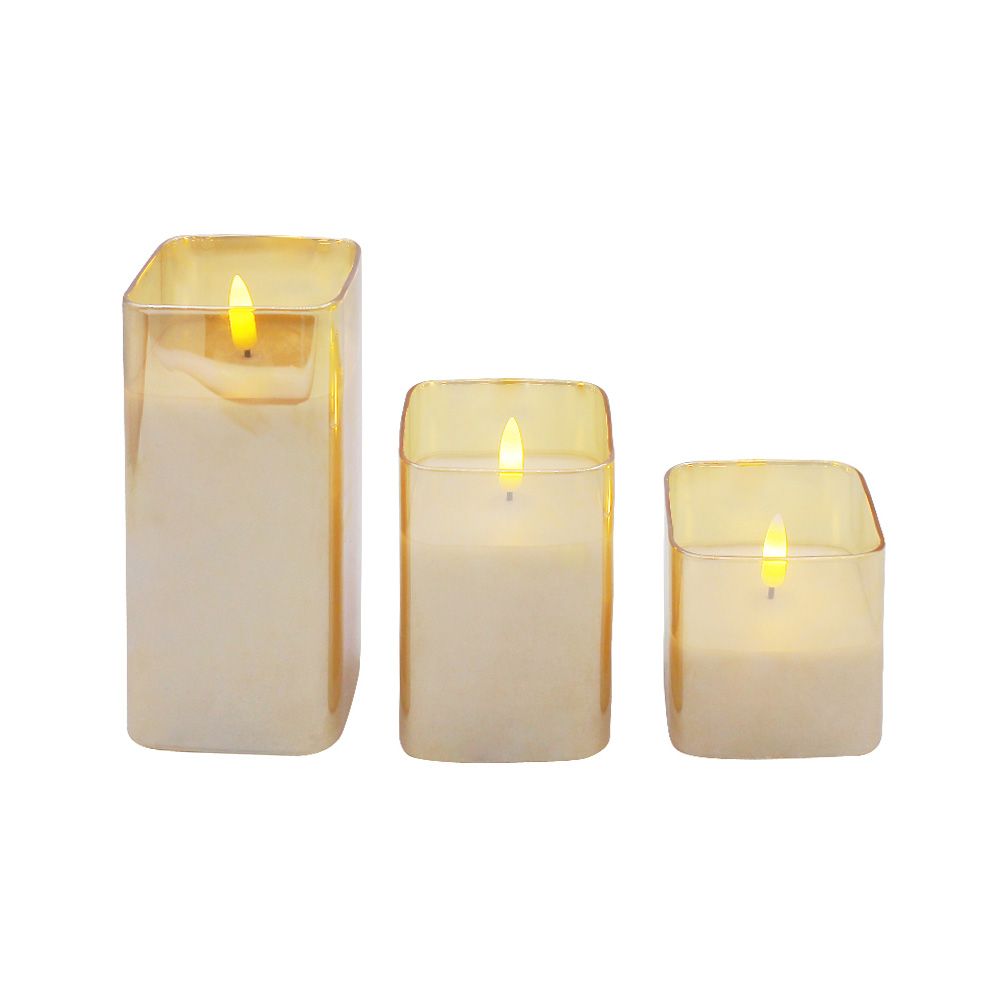
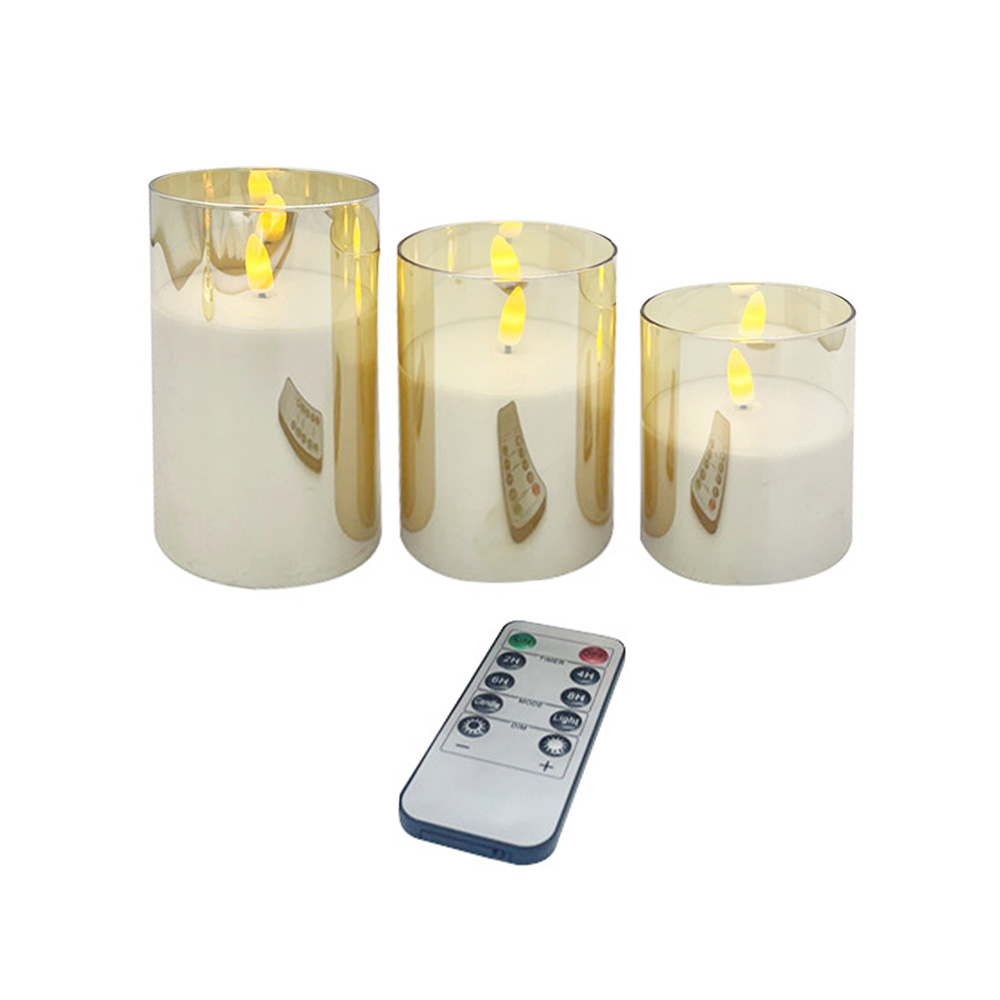
Glass carries the premium look and the breakage risk. Budget for moulded pulp or EPE and expect the carton cube to grow, which quietly erodes the margin advantage you negotiated on the unit price.
Cement is the current favourite for outdoor and industrial styling, and it is the heaviest option on the pallet. It also needs sealing, because unsealed concrete cracks through freeze-thaw cycles. "Waterproof" should be backed by a stated IP rating and a described test, not by an adjective on the sample bag.
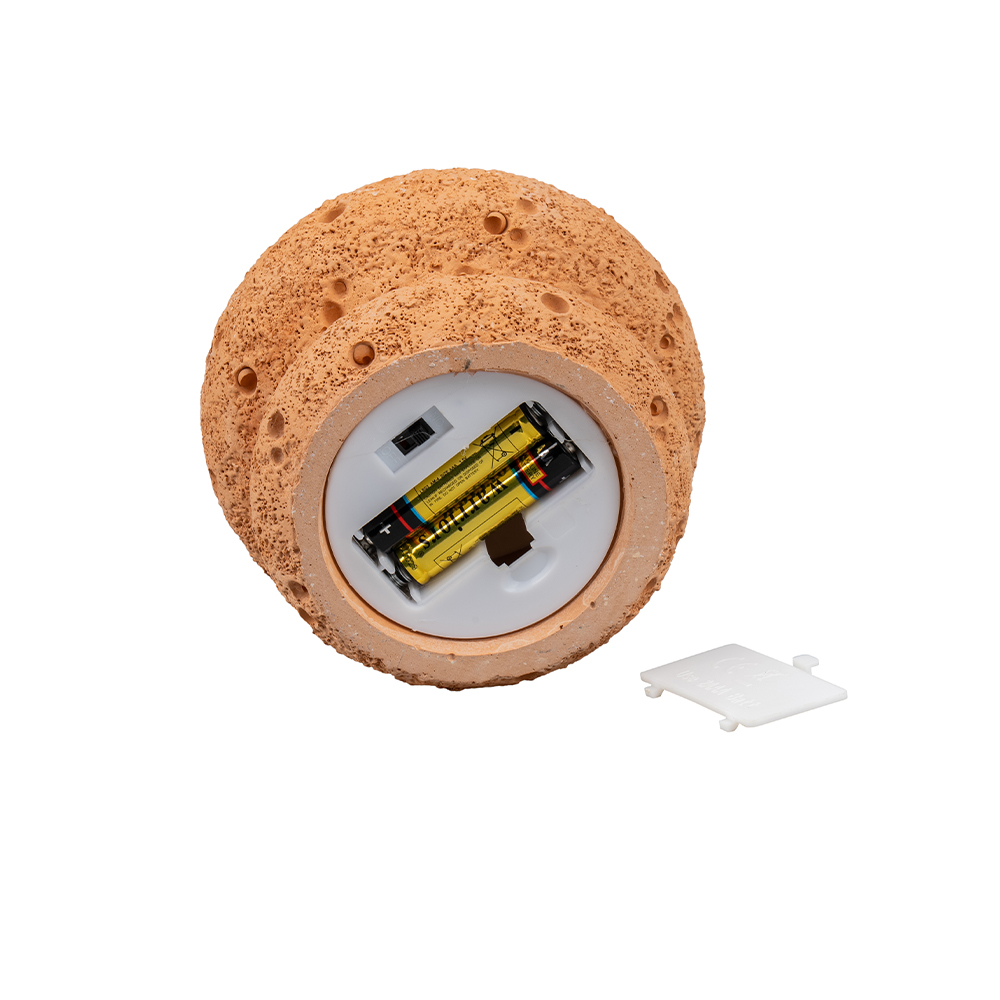 Waterproof Outdoor Cement LED Flameless CandleCement-and-wax outdoor flameless candle with 3D flicker, 3 AAA power, timer/remote options, and listed waterproofing for gardens, patios, and humid settings.View Product →
What Belongs in the Purchase Order
Most quality arguments trace back to a specification that was never written down. These items are worth the extra page.
- Run time in hours, at a stated brightness level, with a named battery brand and a stated ambient temperature.
- Quiescent current in milliamps, measured with the switch off and the timer armed.
- Timer drift in minutes per day, and whether the timer resets after a battery change.
- Remote pairing rules, including whether one remote can control mixed SKUs in the same assortment.
- IP rating with the test method, especially for outdoor and bathroom-adjacent products.
- Battery compartment design: screwed cover for children's ranges, sliding cover for adult decor.
- Drop test height and carton faces, plus a vibration check that mimics a 30-day sea leg.
- Storage instructions covering cell removal for long warehousing, since leakage is a slow and invisible failure.
For a fuller walk-through of the sourcing sequence, the guide on how to source LED flameless candles covers sampling rounds and supplier comparison in more detail.
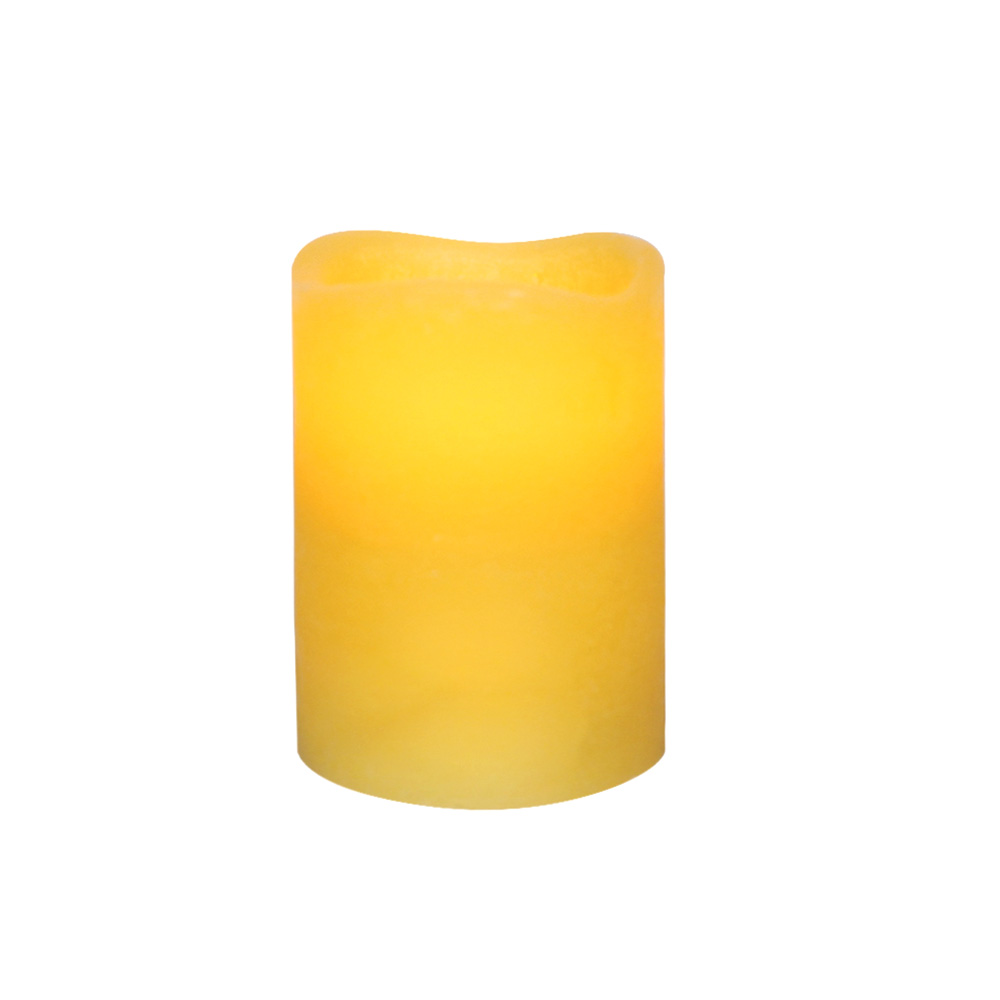 Battery-Powered LED Flameless Candles with 3D FlickerWholesale plastic-and-wax LED candles with 3D flicker, 2 or 3 AAA power, timer/remote options, and optional CE/RoHS/FCC certification for sourcing review.View Product →
Documentation That Clears Customs and Retail Audits
For the European market, CE marking and a RoHS declaration are the baseline, and the technical file should actually match the shipped bill of materials rather than a previous revision. Lithium rechargeable versions need UN38.3 test summaries and a safety data sheet before any forwarder will accept the booking. Wax and coated surfaces may also trigger REACH questions from larger retailers, particularly around colourants and fragrance.
Keep the test reports versioned against the SKU. A certificate that names an older model number is the fastest way to fail an incoming audit, and it is entirely avoidable if the file is updated when the mould changes. Our own compliance documents are listed on the certification page and are the right starting point for that conversation.
Timing the Seasonal Program
A battery powered candle program is a chain of dependent steps, and each one has a floor. Specification freeze, then sampling at 10 to 15 days, then tooling at 20 to 25 days if a new mould is needed, then production at 25 to 35 days, then inspection, then 30 to 40 days of ocean freight to Rotterdam or Long Beach, then DC allocation.
Work backwards from the shelf date and add a buffer for the Chinese New Year shutdown, which removes three to five weeks of factory capacity in late January and February. As a practical rule, Q4 assortments should be committed by the end of May, and October promotional programs by the end of June. Buyers who order in August are not buying a product at that point; they are buying air freight.
The Short Version
Specify the cell format, the quiescent current and the run-time test conditions first. Choose the wick mechanism second, because that is what the shopper is really paying for. Choose the housing third, with freight weight and summer temperatures in the room. Do those three in that order and the sample on the desk in July will still be the same product on the shelf in December.


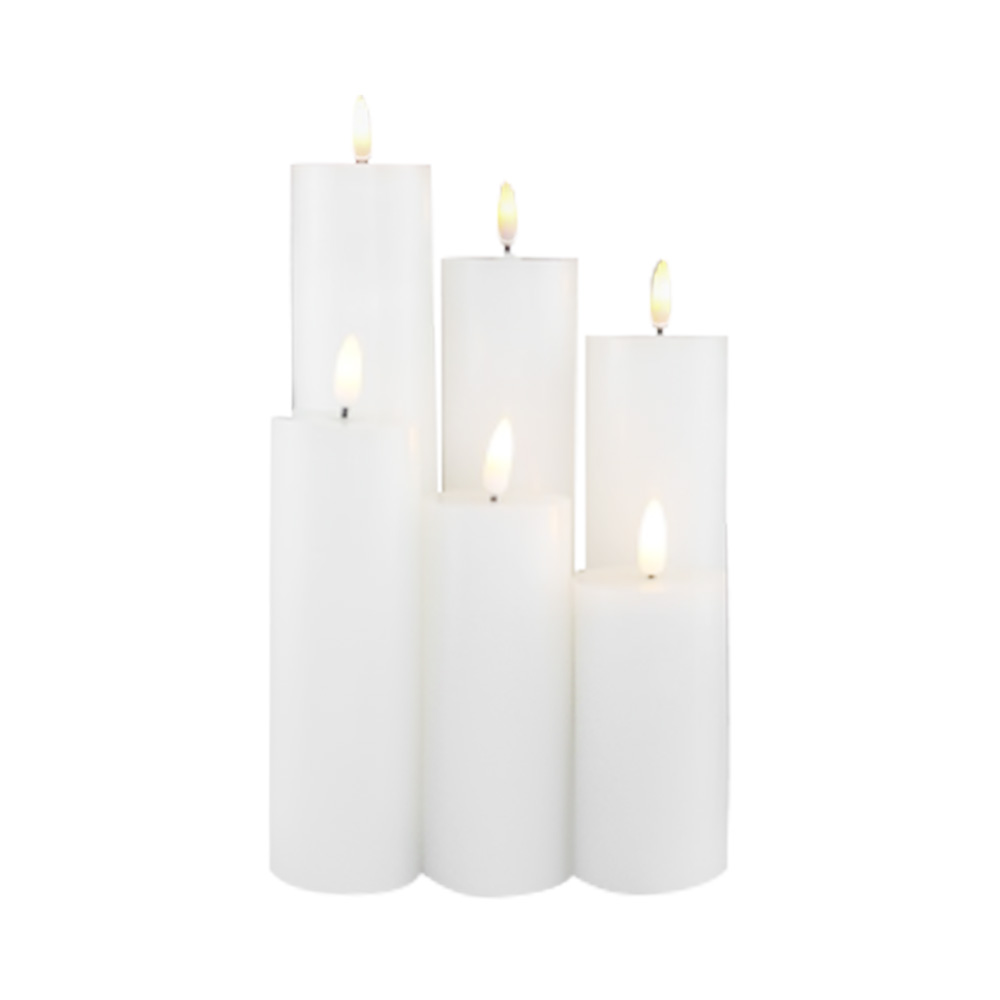

Ningbo Weizhi Electronics Co., Ltd.
- We will be pleased to provide products with high quality, reasonable price, punctual delivery and best service for you!
GET A QUOTE
Building 2, No. 2477, Cihai North Road, Xipu Town, Zhenhai District, Ningbo City, China
-
 +86-18067520996
-
 +86-574-86561907
-
 +86-574-86561907
-
 [email protected]
- +8618067520996
- +86 18074202116
- WhatsApp: +86 18067161072

Copyright 2024 Ningbo Weizhi Electronics Co., Ltd. All Rights Reserved.
 Wholesale Outdoor Flameless LED Candles Manufacturers
