


 English
 Deutsch
Rechargeable Flameless Candles: Battery Life, IP Rating, and Sourcing Guide
Rechargeable flameless candles pay for themselves only when three numbers line up: hours per charge, cycle life, and the cost of the labor that swaps the batteries. A 3-inch pillar that runs 25 hours per charge and still holds 80 percent of its capacity after 300 cycles beats a disposable AA candle on cost per lit hour from roughly the second season. A cheap rechargeable that runs six hours and fades after 90 cycles never gets there, and it is usually the product that generates complaints in the January returns window.
Those three numbers are set by four parts: the cell, the charge board, the LED, and in premium models a small motor that drives a 3D wick. Knowing which part is limiting your runtime makes specification far easier than comparing marketing claims.
Rechargeable vs. replaceable: where the break-even sits
For a candle lit two hours a night, a pair of alkaline AA cells and a USB-C rechargeable pillar land within cents of each other in year one. The gap opens in year two, when the alkaline candle is on its fourth set of cells and the rechargeable is on its sixtieth charge. The table below compares the four power options buyers most often weigh, with runtime ranges that reflect timer and moving-wick use rather than peak laboratory figures.
| Power option | Typical capacity | Runtime per charge or set | Service life | Best fit |
|---|---|---|---|---|
| 2x AA alkaline, replaceable | About 2,500 mAh per cell | 200 to 350 hours in timer mode | One discharge, then discarded | Seasonal window displays |
| 2x AA NiMH, replaceable | 800 to 1,000 mAh | 80 to 150 hours | 500 to 1,000 cycles | High-turnover tea lights |
| Built-in Li-ion, USB-C | 600 to 1,200 mAh | 20 to 40 hours, static LED | 300 to 500 cycles | Dimmable pillars with remote |
| Built-in Li-ion, 3D wick | 600 to 1,200 mAh | 8 to 20 hours | 300 to 400 cycles | Restaurant and bar tables |
Two consequences follow. First, a 3D wick candle with the same cell as a static model needs charging roughly three times as often, so the charge port and its strain relief become a wear item rather than an accessory. Second, where staff swap candles nightly, a magnetic dock charging at 1 A is worth more than extra capacity: four hours to full fits a closing shift, while a 1.5 A USB-C version fits a two-hour reset between sittings.
What actually drains a rechargeable candle
Published runtime is usually measured at minimum brightness with the flicker motor off. Real use looks different, and five factors account for most of the gap.
- The moving wick motor. A 3D wick mechanism commonly draws three to five times the current of the LED beside it, which is why two visually identical candles can differ by 20 hours of runtime.
- Brightness setting. Output is not linear; stepping from low to high can double current draw.
- Timer and receiver standby. A remote receiver that idles at 0.1 to 0.2 mA drains roughly 17 to 34 mAh per week from a 1,000 mAh cell, about two percent.
- Temperature. Below 0 degrees Celsius, lithium-ion cells give up 15 to 25 percent of usable capacity, so a candle rated at 30 hours indoors may run 22 hours on a cold patio.
- Sealing. A tightly gasketed outdoor body traps heat around the charge board, and converter efficiency drops as the cell warms.
Runtime per charge from one 1,000 mAh cell across four use profiles:
If your order depends on timer or remote functions, ask the factory to quote runtime with the receiver powered and the motor running, not with both disabled.
 Wholesale Remote Control 3D Flameless LED CandleFor orders where timer and remote runtime matter, this 3D flameless candle offers remote options, timer settings, and battery-powered operation.View Product →
Cycle life: read the fade curve before you place the order
A rechargeable candle does not fail suddenly. It fades, and the fade rate decides whether a two-year warranty is safe to offer. Cell supplier data puts a good 1,000 mAh lithium-ion cell at roughly 98 percent retention after 100 cycles, 90 percent at 300, 82 percent at 500 and about 70 percent at 800. That is why a buyer should write "at least 80 percent of rated capacity after 300 full charge and discharge cycles" instead of a vague service-life statement.
Average capacity retention per cycle count:
Two specification details move the curve more than the cell brand. A charge board that terminates at 4.2 V and cuts off at C/10 preserves capacity far better than a trickle charger that keeps pushing current into a full cell. A low-voltage cutoff at 3.0 V prevents the deep discharge that permanently removes capacity, so candles that glow until the LED dims to nothing are shortening their own life every night.
A working map of rechargeable flameless candle types
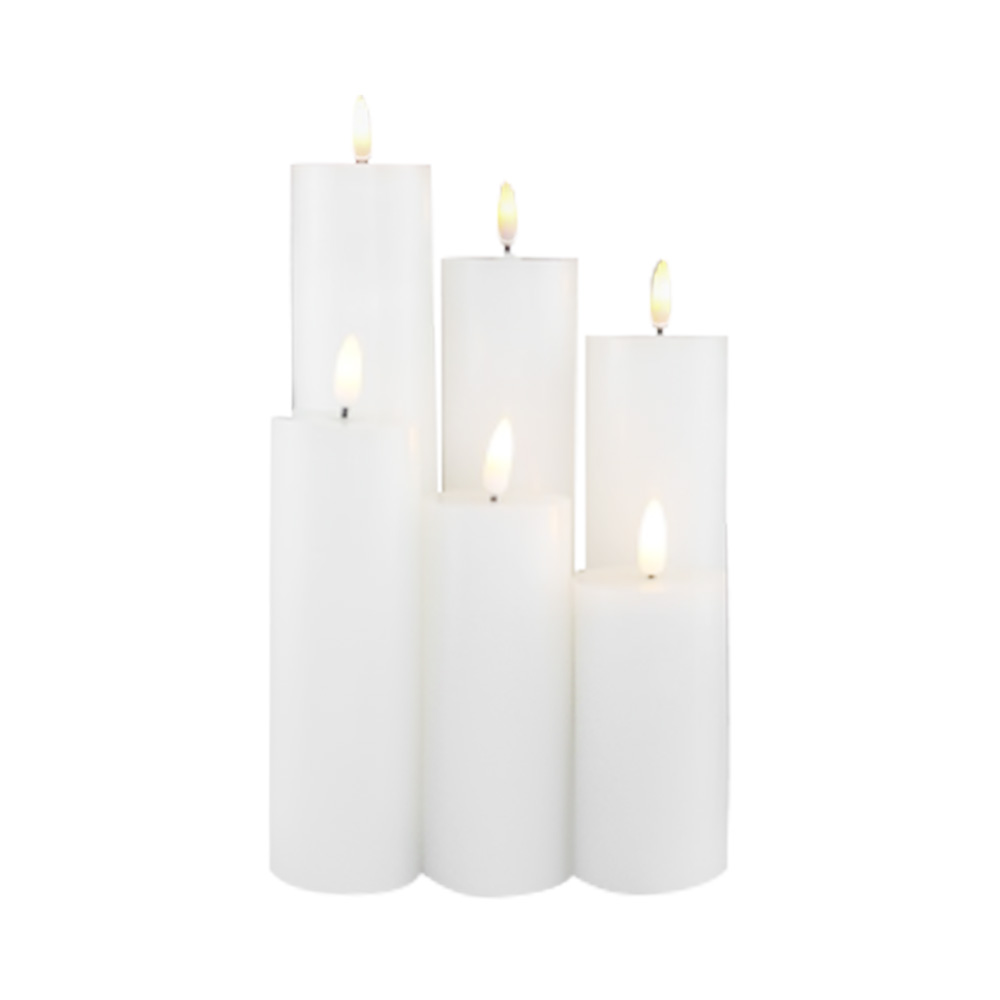
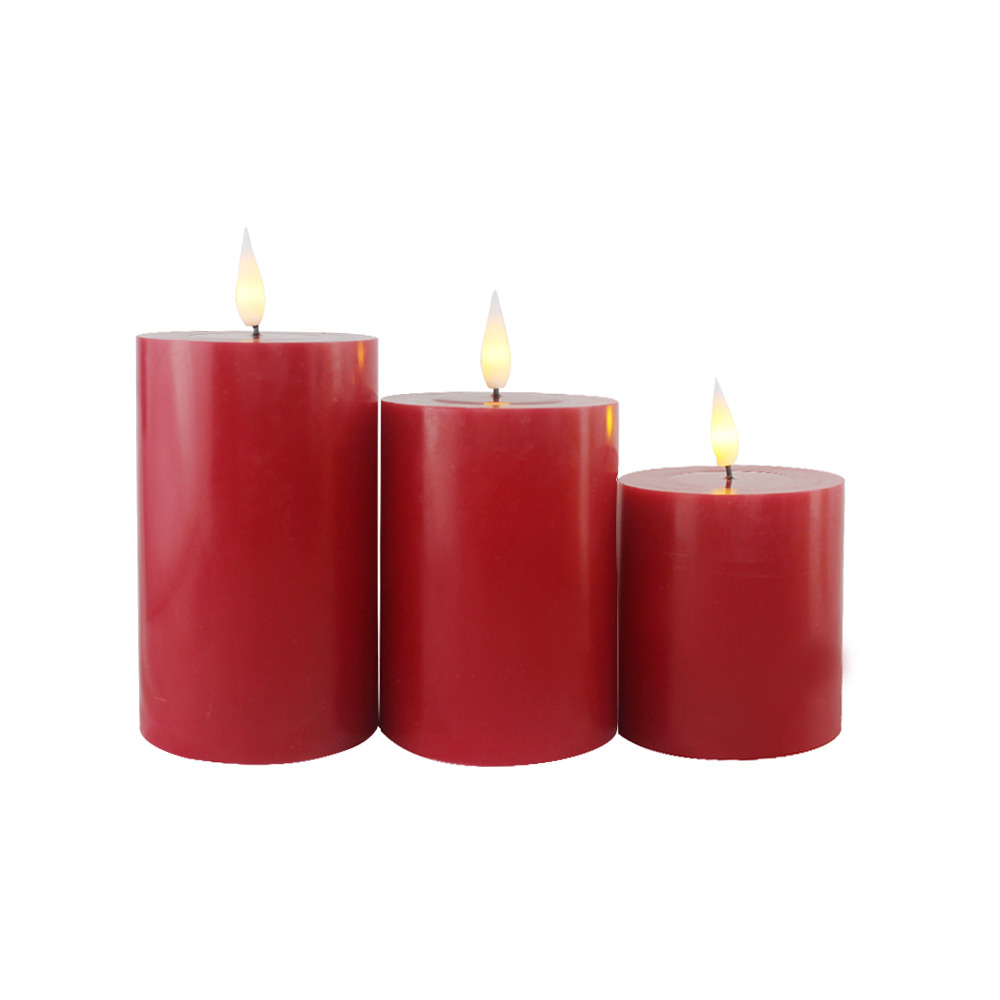
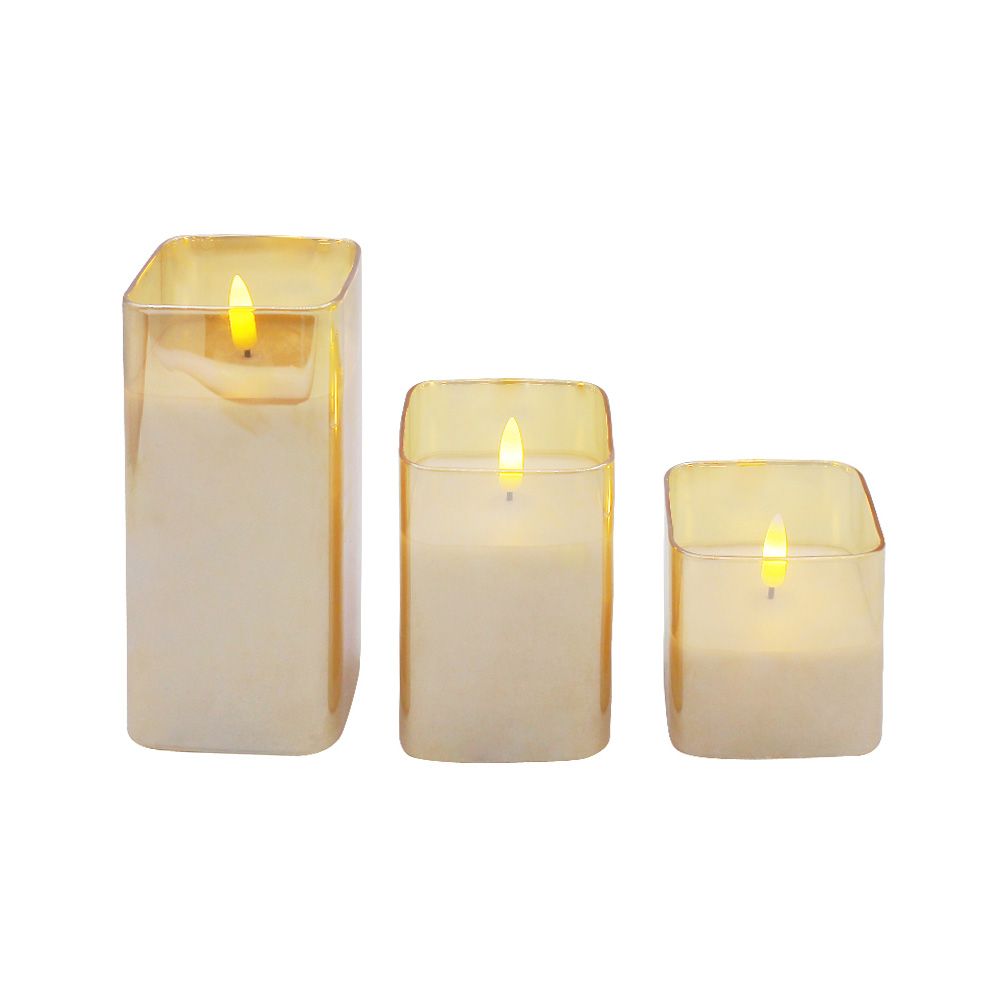
Most rechargeable ranges are variations on six shapes, and the shape usually decides whether a rechargeable cell is worth fitting at all. The map below follows the way a factory such as Ningbo Weizhi Electronics organises its flameless candle lines, from 3D wick pillars through to cement and taper formats.
IP ratings and the outdoor question
Rechargeable and waterproof are independent claims, and confusing them is the most common sourcing error in this category. IP44 covers splashing water from any direction and is enough for a covered porch; it does not survive a garden sprinkler left running. IP65 handles water jets and is the realistic minimum for an exposed patio table.
Two design details decide whether an outdoor rechargeable candle still meets its rating in month six rather than week one. The charge port needs a gasket that seals against the housing, not a rubber flap that hangs open, because a flap-protected port usually shows corroded contacts after a season of rain. The gasket material also has to stay flexible below freezing, since a hardened silicone ring will not reseat after the first cold night. Test the rating with the cell installed and the port closed, not on an empty shell.
For patio, terrace and hotel use, a sealed cement-body candle with a recessed port holds up better than a thin plastic shell, because the housing absorbs impact and keeps the gasket away from the flame aperture. One example from current production is the waterproof outdoor battery-operated cement 3D candle.
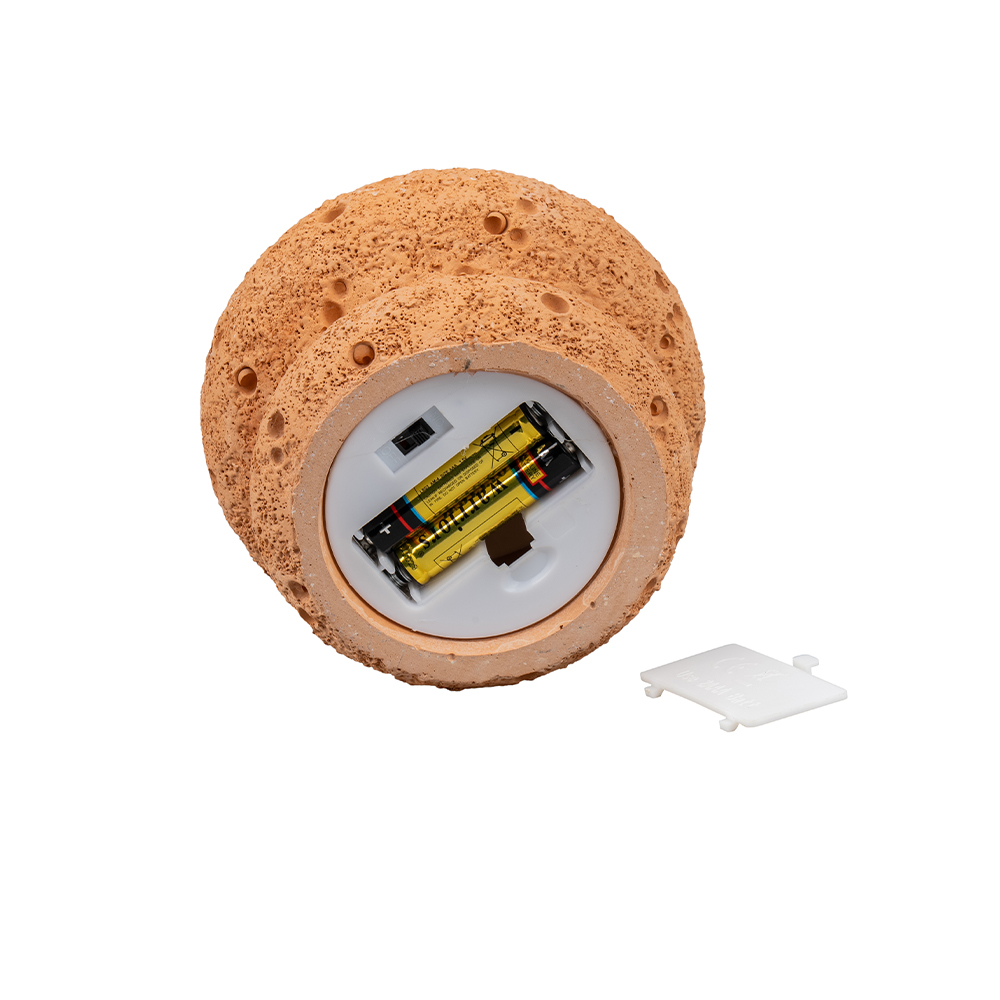 Waterproof Outdoor Cement 3D LED Flameless CandleFor patio, terrace, or hotel settings, this waterproof cement-body 3D LED candle provides ON/OFF and timer functions with customizable color and packaging.View Product →
A specification checklist for rechargeable flameless candles
Put these points in the purchase order rather than the marketing brief. They are the ones that decide whether a container passes inspection.
- Capacity retention: at least 80 percent of rated capacity after 300 full cycles, tested at 25 degrees Celsius.
- Standby drain: no more than 0.1 mA with the remote receiver idle, measured 24 hours after a full charge.
- Low-voltage cutoff: 3.0 V for a single lithium-ion cell, with automatic recovery after charging.
- Charge port: 5,000 insertion cycles minimum for USB-C, or 3,000 mating cycles for a magnetic dock, rated at 1 A or higher.
- Charge time: quoted as a range from empty to full with the supplied adapter, not a best case.
- Colour temperature: 1,800 K to 2,200 K for a convincing flame; anything above 2,700 K reads as a lamp.
- Flicker behaviour: variable, non-periodic flicker between 3 and 8 Hz; a fixed sine flicker looks mechanical within a minute.
- Sealing: IP rating verified with the cell installed and the port closed, plus a one metre drop test onto a hard floor.
- Documentation: CE and RoHS declarations matched to the production batch, with the batch number on the paperwork.
Two sourcing steps are worth completing before tooling. Ask for a 300-cycle fade test on three cells drawn from the same batch rather than one golden sample, because cell batches vary more than boards do. Then confirm the safety file. CE and RoHS documentation should be issued for the exact model you are buying, with the LED driver, charge board and cell listed separately, since a compliant candle assembled from a non-compliant charger is still a non-compliant shipment. Our buyer's guide to sourcing LED flameless candles covers the inspection points in more detail.
 Wholesale Flameless LED Cylindrical Candle with Optional Timer and RemoteFor specification work, this battery-powered cylindrical flameless candle lists model sizes, battery types, and optional timer or remote control.View Product →
Rechargeable flameless candles are a battery decision wrapped in a decor product. Settle the cell, the charge port and the cutoff voltage first, and flicker quality, finish and packaging stop being trade-offs against runtime. Buyers who run 300 cycles before committing to a container usually discover that the cheapest rechargeable option was never the cheapest candle.



Ningbo Weizhi Electronics Co., Ltd.
- We will be pleased to provide products with high quality, reasonable price, punctual delivery and best service for you!
GET A QUOTE
Building 2, No. 2477, Cihai North Road, Xipu Town, Zhenhai District, Ningbo City, China
-
 +86-18067520996
-
 +86-574-86561907
-
 +86-574-86561907
-
 [email protected]
- +8618067520996
- +86 18074202116
- WhatsApp: +86 18067161072

Copyright 2024 Ningbo Weizhi Electronics Co., Ltd. All Rights Reserved.
 Wholesale Outdoor Flameless LED Candles Manufacturers
